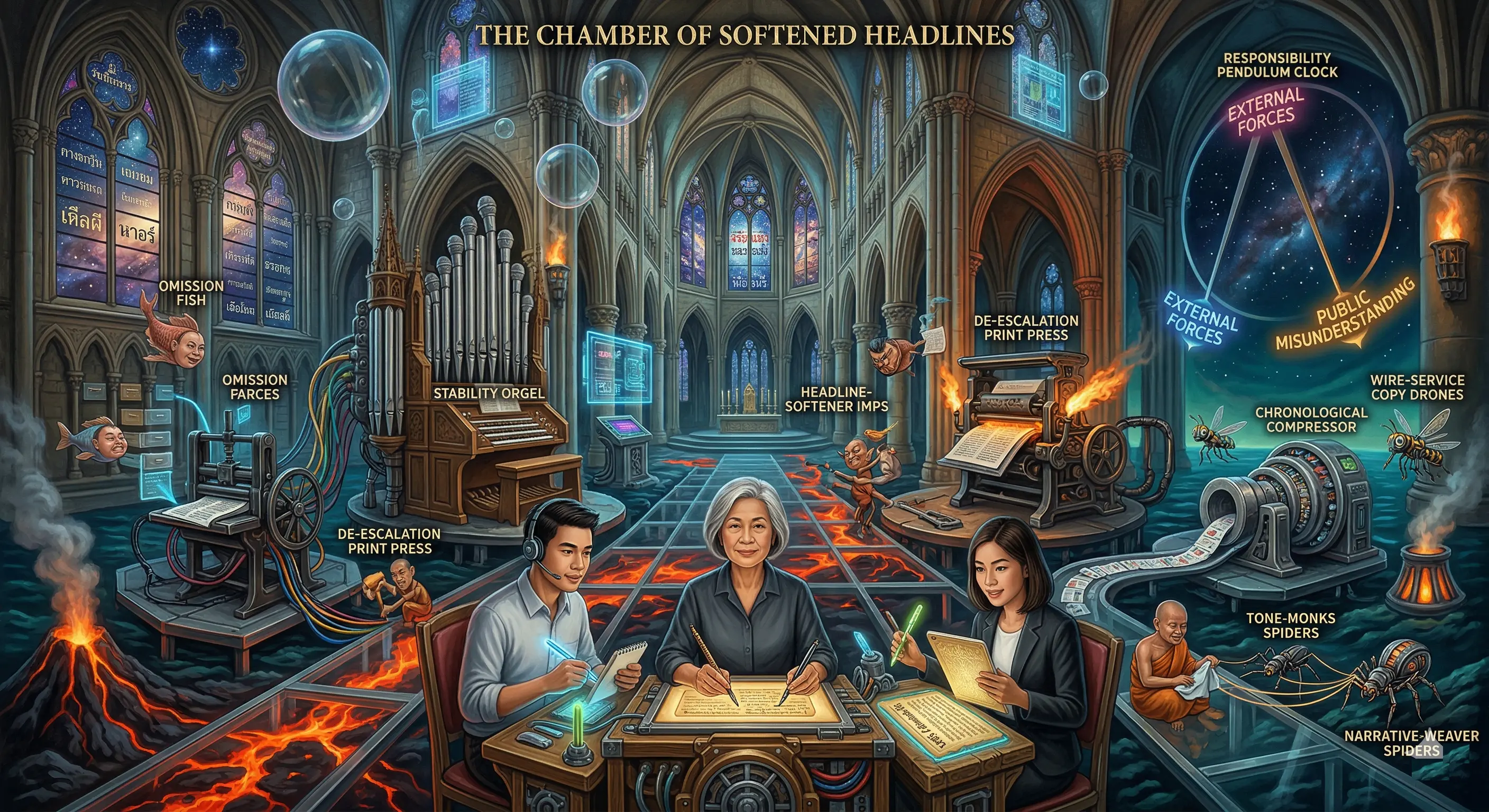
0005 - Bangkok Post: Editorial Patterns and Narrative Behavior
How the newspaper constructs, softens, and sequences political communication
1. Event Overview
This post analyses how the Bangkok Post writes — not what it writes about.
It focuses on recurring editorial patterns that shape tone, framing, and narrative structure across political, economic, and policy coverage.
These patterns correlate strongly with the newspaper’s financial dependency, ownership concentration, and institutional alignment (see 0003, 0006, 0007).
2. Media Framing Patterns
a) Stability Framing
Stories emphasise:
continuity
order
predictability
Even when events are uncertain, contradictory, or structurally unstable.
b) Responsibility Framing
Responsibility for problems is often shifted toward:
external forces
global conditions
public misunderstanding
Institutional actors are rarely framed as primary drivers of failure.
c) De‑escalation Framing
Potentially conflict‑heavy stories are softened through:
neutralised headlines
cautious language
avoidance of confrontation with powerful stakeholders
d) Business‑Friendly Framing
Economic reporting tends to align with investor and business interests — consistent with the newspaper’s ownership and advertiser base.